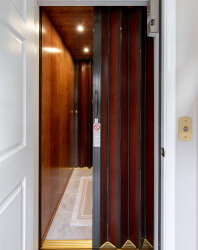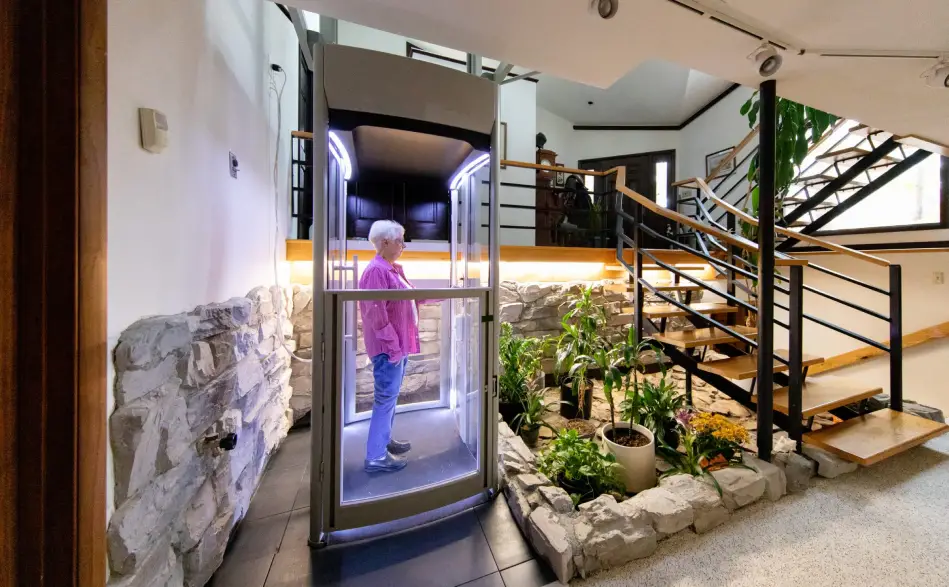


Homeowners trust Signature Elevators & Accessible Design for home elevator installation in Maryland, Northern Virginia, and Washington, D.C. Our in-house team of designers and builders oversees all aspects of residential accessibility remodeling. Since 2009, we’ve been helping seniors age in place in the homes they love with a high quality of life.
Contact Signature Elevators & Accessible Design to learn more about home elevator installation in Maryland, Northern Virginia, and Washington, D.C.
Why Choose Signature Elevators & Accessible Design?
We’re a locally owned and operated company with over 15 years of residential elevator design and construction experience. Our team also designs and builds stairlifts, platform lifts, and many other accessibility solutions. We pride ourselves on personalized service, honest recommendations, and high-quality workmanship. Our company stands behind everything we do with industry-leading warranties and workmanship guarantees.
- Fully licensed and insured contractor
- In-house team of designs and builders
- Extensive experience with DMV houses
- A compassionate and quality-of-life-driven approach
- An emphasis on blending function with aesthetics
- Transparent, upfront pricing without surprise fees
Planning Your Home Elevator
You can begin planning your home elevator through a visit to our physical showroom or an in-home consultation. We have experienced, client-oriented project planners to help coordinate every detail. That process includes choosing the best elevator for you and your home while also maximizing your budget. We can also help you consider the other accessibility options we offer. Our straight and curved stairlifts are an alternative to elevators. We also offer vertical platform lifts as an alternative to outdoor and indoor ramps.
- Arthritis or chronic pain
- Persistent balance issues
- Reliance on mobility aids
- Anxiety when using stairs
- Mobility shaping lifestyle your choices
Custom Home Elevator Design
There is no one-size-fits-all solution for residential home elevators. Every home is unique, and every client has their own mobility and budget requirements. We design accessibility solutions based on those mobility needs, the home’s floor plan, and the available space. Our team optimizes these systems for long-term performance even in high-usage scenarios. We also employ leading-edge safety practices and install the latest safety features.
Residential Elevator Installation Process
Our process usually begins with an in-person consultation. That consultation is an opportunity to explore options, discuss concerns, and answer questions. We often provide these consultations in the home where the client wants to install the elevator. Clients can also visit our showroom to see many of the products we offer up close and personal.
Once you have made your design decisions, our architects will get to work. That includes planning the elevator design and any remodeling your home may need. Our in-house construction team will install your new elevator while maintaining clean and safe work areas at all times. The typical installation takes between two and five days. The entire process, from beginning to end, generally takes 4 to 12 weeks.
- Architectural and system design
- Construction
- Permitting
- Code-compliance inspections
- Customer education and walkthroughs
- Customer satisfaction follow-ups
Retrofit Elevator Installation
Our team has extensive experience planning and finishing retrofits. These are elevator installations in existing homes that don’t currently have an elevator. This is a popular option for seniors who want to age in place in the home they love. Our process includes any of the ancillary structural and aesthetic remodeling that the home may need.
Standard and Pneumatic Elevators
Standard or shaftless elevators have a smaller footprint because they lack a dedicated shaft. That makes them a good option in retrofits where there isn’t much available space. Pneumatic vacuum elevators have a shaft, which gives you more options overall. Still, they don’t need a machine room, pit, or extensive framing.
Start Your Elevator Project
In-home consultations are available for our Stiltz elevators and other products at no charge and without obligation. You can request that appointment online or by phone. During your appointment, we can discuss insurance, if applicable, and financing, which we offer on approved credit. You can also visit our physical showroom anytime during our standard business hours or by appointment.
Signature Elevators & Accessible Design is the trusted choice for home elevator installation in Maryland, Northern Virginia, and Washington, D.C. To request service, contact us today.
Frequently Asked Questions
Here are answers to common questions about home elevator design and installation. Contact us at your convenience with any additional questions.
Can A Home Elevator Be Added To An Existing House?
Yes, our residential elevator installation services often involve retrofitting existing homes. We provide in-home accessible design consultations at no cost and without obligation. During that appointment, we can assess your home’s floor plan and take exact measurements. Our project planners can then answer your questions and explore the various elevator options suitable for your home.
How Much Space Does A Residential Elevator Need?
We offer a wide range of home elevator options to accommodate older and smaller houses. That includes elevators, stairlifts, and other accessibility options with very small footprints. The typical installation needs about 25 square feet of installation space overall. That said, we offer compact solutions that only require between 6 and 9 square feet of space.
What Type Of Home Elevator Is Best For Aging In Place?
Our company offers a variety of elevator configurations to accommodate your unique needs and homes. Shaftless elevators are popular for aging in place, as they’re among the most practical, safest, and least disruptive options. They offer enough space to accommodate a wheelchair or home items you want to move from floor to floor. The typical elevator can support up to 600 pounds, but maximum capacities of 1,000 or more are available.