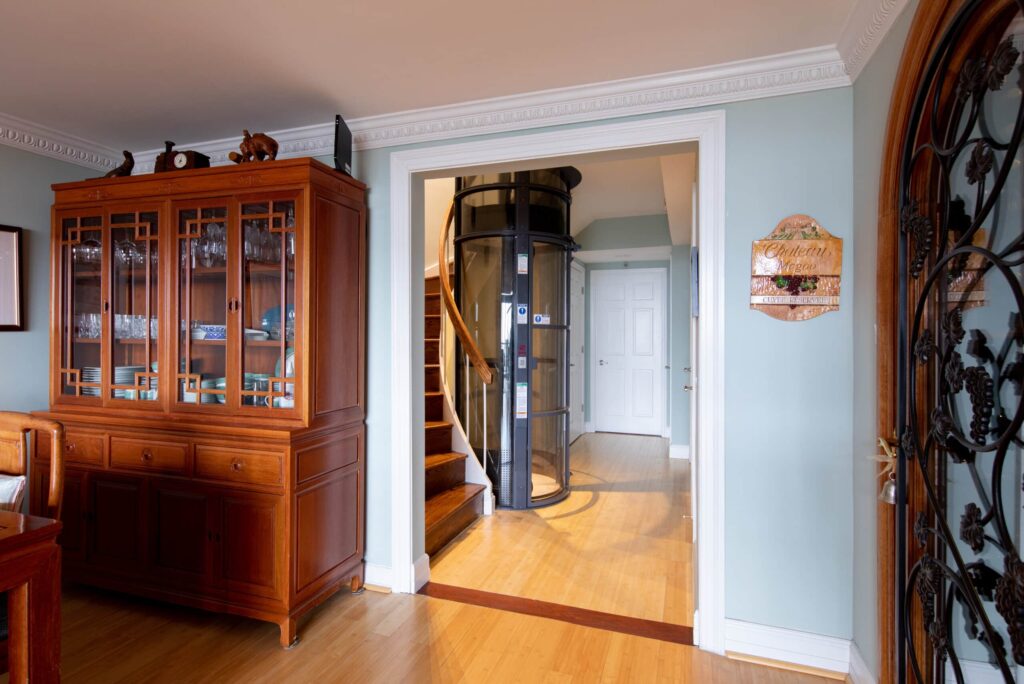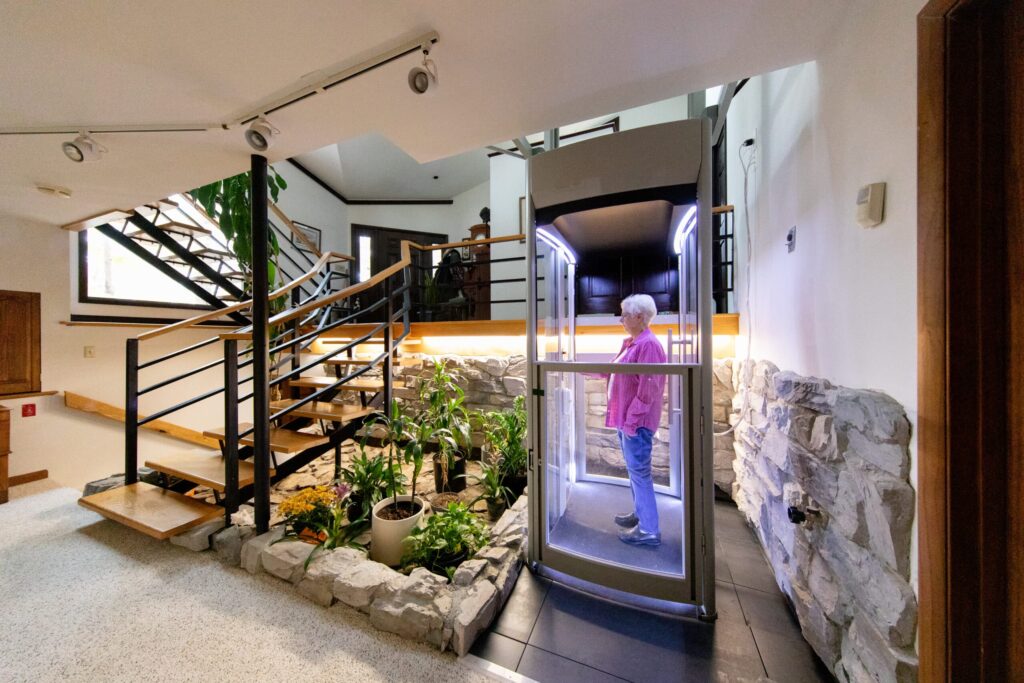


When exploring home accessibility options, you’ve likely encountered pneumatic vacuum elevators. Their futuristic, tube-like appearance stands out from traditional models, but are they right for your property?
These innovative systems offer unique benefits, especially where space is a premium. However, they also have limitations that make them unsuitable for certain needs. This guide reviews the pneumatic vacuum elevator pros and cons to help you decide if one is right for your home.
How Do Pneumatic Vacuum Elevators Work?
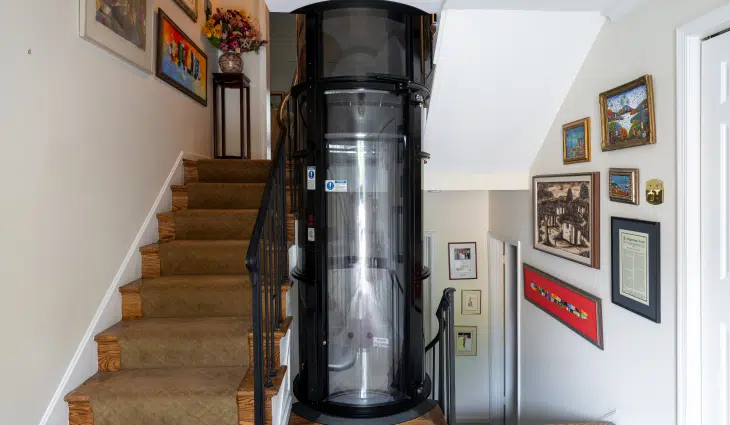
Unlike other residential elevators that use cables, pulleys, or hydraulics, pneumatic elevators operate on a simple yet brilliant principle: air pressure. The elevator consists of a sealed vertical tube and a cab that fits snugly inside.
To go up, turbines at the top of the tube draw air out, creating a vacuum above the cab. The higher atmospheric pressure below the cab then pushes it upward. To descend, valves slowly release the vacuum, allowing the cab to lower gently and smoothly. This elegant design eliminates the need for a separate machine room, pit, or hoistway, making it a self-contained and highly efficient system.
The Advantages of a Pneumatic Home Elevator
Many homeowners like the distinct benefits of pneumatic elevators, which solve many of the challenges that come with traditional installations. Some pneumatic home elevator benefits include:
Minimal Construction and Small Footprint
A significant benefit is its minimal construction. Because the system is self-supporting and doesn’t need a pit or hoistway, you can integrate it into an existing home with less disruption. Its compact, cylindrical design also takes up less floor space than other elevator types, making it ideal for tight spaces.
Sleek, Modern Aesthetics with Panoramic Views
Pneumatic vacuum elevators offer a contemporary look, too. The clear polycarbonate tube provides 360-degree panoramic views as you ride, which not only prevents claustrophobia but also allows natural light to flow through. This transparent design helps the elevator blend seamlessly into your home’s architecture rather than looking like a bulky addition.
Quick and Clean Installation
The self-contained nature of pneumatic vacuum elevators simplifies the installation process. With less need for major structural modifications, you can often complete a professional home elevator installation in just a few days. This means less noise, dust, and disruption to your daily life compared to more complex elevator projects.
Energy Efficiency and Safety
These elevators are remarkably energy-efficient. The turbines only use significant power during ascent, while the descent uses gravity with valves to control the speed. They are also safe. In the event of a power failure, the cab automatically descends slowly to the ground floor, and mechanical locks secure it in place at every stop.
Pneumatic Elevator Limitations to Consider
While the advantages are compelling, it’s equally important to review the pros and cons of pneumatic elevators with a clear understanding of their limitations.
Limited Capacity and Cab Size
Vacuum elevators are designed for personal mobility, not for moving heavy cargo or large groups. Most models can carry one to three people, with weight capacities typically ranging from 350 to 525 pounds. The compact cab size means you shouldn’t use them to transport furniture, bulky luggage, or multiple passengers at once.
Travel Distance and Floor Restrictions
Pneumatic technology is best for low-rise applications. These elevators generally have a maximum travel distance of around 50 feet, accommodating up to five stops. This is more than sufficient for most homes, but they are not an option for very tall residences.
Not Ideal for All Accessibility Needs
While some larger models can accommodate a wheelchair, their compact interior may not be suitable for all mobility devices, particularly larger powered wheelchairs or scooters. Measure your specific equipment and discuss your accessibility needs with an expert before making a decision.
Is a Vacuum Elevator Right for My Home?
So, are pneumatic elevators good and right for your situation? The answer depends on your priorities and requirements. Consider a vacuum elevator if:
- You’re retrofitting one into an existing home
- You have limited floor space
- You value modern aesthetics and natural light
- You’ll be transporting one or two people
- You need a quick, less disruptive installation
On the other hand, you may want to explore other options if you need to transport a larger wheelchair, move heavy items, or require a higher weight capacity. It’s always a good idea to research which type of home elevator is best for your circumstances.
Find Your Perfect Home Elevator with Signature Elevators
Choosing a home elevator is a major decision. While understanding the pneumatic elevator advantages and disadvantages is a great start, nothing replaces professional guidance. An on-site consultation allows an expert to assess your home’s structure, understand your mobility goals, and recommend the best solution for your needs.
At Signature Elevators, we specialize in helping homeowners find the ideal mobility solution. Our experienced team can walk you through the vacuum elevator pros and cons and make sure your choice enhances both your home and quality of life.
To discuss pneumatic vacuum elevator installation or explore other home elevator options, contact Signature Elevators today for a personalized consultation.